In high-volume commercial bakeries, restaurants, and catering operations, bakeware is subjected to grueling conditions every day. High heat, heavy thermal cycling, constant mechanical washing, and rigorous handling take a toll on even the most durable aluminum, aluminized steel, and stainless steel pans.
While commercial-grade sheet pans, muffin tins, and cake molds are designed for long-term endurance, they do not last forever. Operating with worn-out, warped, or degraded bakeware directly compromises product quality, inflates labor and energy costs, and introduces safety and hygiene risks into your kitchen.
Knowing when to retire and replace your commercial bakeware fleet is essential to maintaining consistent baking standards and operational efficiency. Here are the key signs that signal it is time for a fleet upgrade.
1. Physical Deformation: Warping, Bending, and Denting
Warping is one of the most common issues in busy kitchens, often caused by rapid temperature changes (thermal shock) or uneven heat exposure over time.
The Problem with Warped Pans
-
Uneven Heat Distribution: A warped sheet pan no longer sits flush against oven racks or deck surfaces. This leads to hot spots and cool spots, causing cookies, pastries, or roasted items to bake unevenly.
-
Batter and Oil Pooling: Liquids and batters naturally slide toward the lowest point of a bent pan, resulting in products with inconsistent thickness and uneven browning.
-
Storage Instability: Deformed pans do not stack cleanly on mobile speed racks or vertical dividers, increasing the risk of pan avalanches and kitchen hazards.
Rule of Thumb: Place the pan on a flat stainless steel prep table. If it rocks, wobbles, or leaves a visible gap underneath, it should be replaced.
2. Non-Stick Coating Degradation
Non-stick coatings (such as PTFE or silicone-based releases) significantly speed up prep and cleanup. However, daily use gradually wears these coatings down.
Key Indicators of Failing Coatings:
-
Persistent Sticking: If staff must heavily grease or spray non-stick pans to release baked goods, the coating has degraded.
-
Flaking, Chipping, or Peeling: Flaking coating poses a direct contamination risk to food products and fails health inspection standards.
-
Discoloration and Scratches: Deep knife scores or metal utensil scratches break the barrier seal, allowing moisture underneath the coating.
While some high-end commercial pans can be professionally recoated, the cost of shipping and recoating lower-to-mid-range pans often exceeds the price of buying new, high-efficiency replacements.
3. Corrosion, Rust, and Pitting
Metal corrosion is a clear sign that a pan has reached the end of its functional life. Rust and deep surface pitting pose both hygiene and structural hazards.
Causes and Risks of Corrosion:
-
Damaged Protective Layers: Aluminized steel pans rely on an outer aluminum layer to prevent rusting of the inner steel core. Scratches, harsh chemical detergents, or prolonged moisture exposure break this protective seal.
-
Food Safety Hazards: Rust flakes can transfer onto baked goods, altering taste, color, and food safety compliance.
-
Sanitation Challenges: Pitted surfaces create microscopic harbors where bacteria, grease, and carbonized debris accumulate, making complete sanitation nearly impossible.
4. Heavy Carbon Buildup and Oil Polymerization
Over months and years of continuous use, fats, oils, and sugar residues undergo polymerization under high heat, forming a dark, sticky, or rock-hard carbonized layer on pan surfaces.
Why Excess Carbon Buildup is Problematic:
-
Insulation Effect: Thick carbon crusts act as an insulator, preventing heat from penetrating the metal efficiently and drastically altering bake times.
-
Off-Flavors and Smoke: Residual burnt oil imparts bitter, smoky flavors to delicate pastries and bread crusts.
-
Increased Labor: Kitchen staff waste hours scrubbing or soaking heavily carbonized pans, driving up labor overhead without restoring the pan’s original performance.
5. Structural Damage: Loose Rims, Broken Wires, and Fractured Joints
Commercial sheet pans feature rolled rims lined with heavy-gauge wire for structural rigidity. Specialized multi-cavity pans (like muffin tins or loaf sets) feature spot-welded frames holding individual cups together.
Red Flags for Structural Failure:
-
Exposed Rim Wires: When the outer metal hem splits, the internal steel wire becomes exposed, rusting quickly and harboring moisture.
-
Broken Spot Welds: In strap loaf pans or muffin pans, broken welds cause individual cups to shift or detach entirely, making automated or manual handling unsafe.
-
Jagged Edges: Cracked aluminum or sharp metal tears present immediate cut hazards to kitchen personnel.
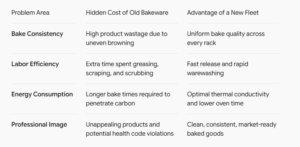
6. Financial and Operational Impact of Replacing Your Fleet
Holding onto worn bakeware may seem like a cost-saving measure, but it often costs more in the long run.
7. How to Extend the Lifespan of Your New Fleet
Once you invest in a new commercial bakeware fleet, adopting proper care protocols will maximize your return on investment:
-
Avoid Thermal Shock: Never plunge hot pans directly into cold sink water or dishwashers.
-
Use Non-Abrasive Tools: Clean pans with nylon pads or soft sponges rather than steel wool or metal scrapers.
-
Choose Mild Detergents: Avoid aggressive caustic chemicals or high-pH detergents that strip aluminum anodization or silicone glazes.
-
Store Vertically or on Speed Racks: Prevent surface scratching by utilizing vertical pan dividers or dedicated mobile racks instead of heavy flat stacking.